
Growing up, my weekends were filled with the comforting aroma of Bibimbap as my mother immersed herself in preparing this vibrant dish. It wasn't just food; it was a delightful blend of colors and textures that brought the family together. The experience of recreating it in my own kitchen is nothing short of nostalgic, awakening both taste buds and memories.
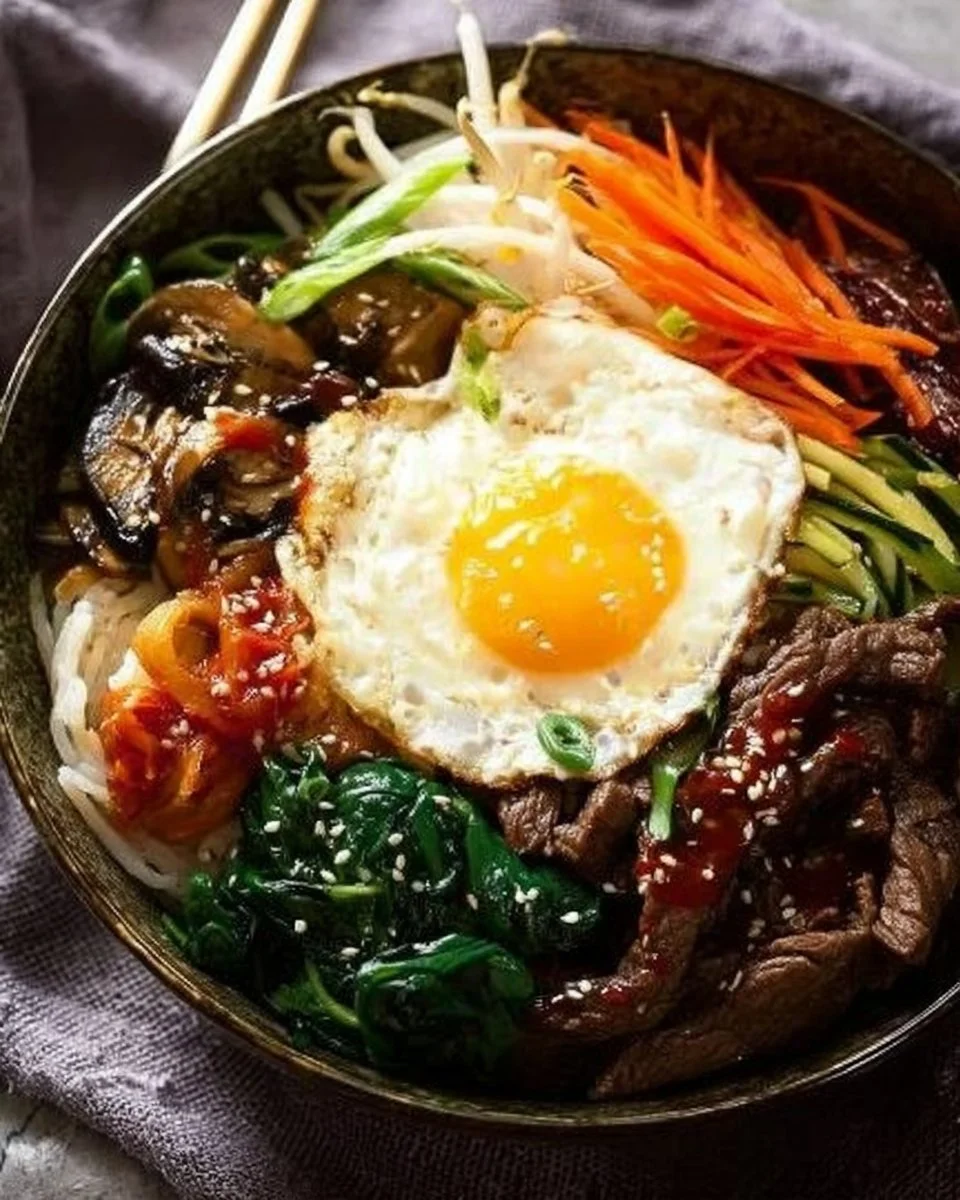
Bibimbap isn't just a meal; it's an adventure of flavors. It’s a bowl that unites diverse ingredients into harmonious perfection, from tender marinated beef to crisp vegetables, all resting on a bed of fluffy rice. Let’s delve into this delicious recipe that’s as comforting as it is captivating.
Jump to:
Why You’ll Love This Recipe
- A Flavor Symphony: Each bite offers a balanced mix of savory beef, fresh vegetables, and spicy sauce: a culinary orchestra.
- Wholesome Ingredients: Packed with nutritious veggies and protein, it’s a satisfying meal in a bowl.
- Customizable Delight: You can easily swap ingredients to suit dietary needs or preferences for endless variations.
- Easy Prepare-ahead: Ideal for meal prepping, allowing flavors to marinate and deepen over time.
- One-Bowl Magic: Everything comes together in one bowl, making it convenient and reducing cleanup time.
Ingredients You'll Need
- Cooked White Rice – 4 cups. Preferably short grain for its sticky texture that holds the dish together.
- Eggs – 4. Add richness and provide a perfect balance to the flavors.
- Sesame Seeds – 2 tsp. Bring a toasted flavor and decorative touch.
- Beef Tenderloin or Thick Steak – 250 g. Sliced finely for tenderness and marinated for rich taste.
- Green Apple – ¼, grated. Adds a hint of sweetness to the marinade.
- Garlic Cloves – 3, minced. Essential for depth of flavor.
- Ginger – 1 tsp, minced. Spicy warmth that complements other seasonings.
- Soy Sauce – 1 tbsp, light or all-purpose. Provides savory umami notes.
- Honey or Brown Sugar – 1 tbsp. Balances the flavors and aids in caramelization.
- Sesame Oil – 2 tsp, toasted. Offers a nutty aroma that enhances the dish.
- Carrots – 2 large, cut into 5 x 0.5 cm batons. Add crunch and a touch of sweetness.
- Zucchinis – 2 large, cut into 5 x 0.5 cm batons. Mild in flavor, they provide the dish with freshness.
- Spinach – 1 bunch, cut into 5 cm lengths. For a leafy texture and slight earthiness.
- Dried Shiitake Mushrooms – 8, large. Rehydrated for a deep umami taste.
- Bean Sprouts – 4 cups. Add a refreshing crunch.
- Garlic – 2 tsp, minced. Enhances the aromatic profile, used for vegetables.
- Vegetable Oil – 8 tsp, separated. For cooking each component individually.
- Salt – ½ tsp. To draw out moisture in veggies.
- Fish Sauce – ¼ tsp. A dash for a salty-savory punch.
- White Sugar – ¼ tsp. Balances acidity and enhances flavors.
- Gochujang Paste – 4 tbsp. The spicy and sweet base of Bibimbap sauce.
- Mirin – 2 tbsp. Adds subtle sweetness to the sauce.
- Rice Vinegar – 2 tbsp. Provides a tangy counterbalance.
- Soy Sauce – 1.5 tsp. Blends with other sauce ingredients for depth.
- White Sugar – 3 tsp. Calibrates the sauce sweetness.
- Garlic Clove – 1, finely grated. Intensifies the sauce's flavor.
- Sesame Oil – 2.5 tsp, toasted. Enriches the sauce with a nutty note.
How to Make Bibimbap
Step 1: Prepare the Bibimbap Sauce
Mix gochujang paste, mirin, rice vinegar, soy sauce, sugar, garlic, and sesame oil until the sugar dissolves completely.
Step 2: Marinate the Beef
Combine grated green apple, garlic, ginger, soy sauce, honey, and sesame oil. Marinate the beef in this mix for at least 30 minutes, up to overnight. When ready, heat 2 teaspoon of oil in a skillet and cook the beef until browned, about 3–4 minutes.
Step 3: Prepare Shiitake Mushrooms
Soak the dried shiitake mushrooms in boiling water for 30 minutes to soften them. Once ready, slice them for later use.
Step 4: Optional Vegetable Salting
To prevent zucchini and carrots from becoming soggy, salt them lightly, let sit for 20 minutes, then drain.
Step 5: Cook the Vegetables
Use separate skillets to cook shiitakes, carrots, zucchinis, and spinach. Cook each until just tender but still vibrant.
Step 6: Cook Bean Sprouts
Simmer bean sprouts in water for 5 minutes or steam them in the microwave for 3 minutes.
Step 7: Assemble the Bibimbap
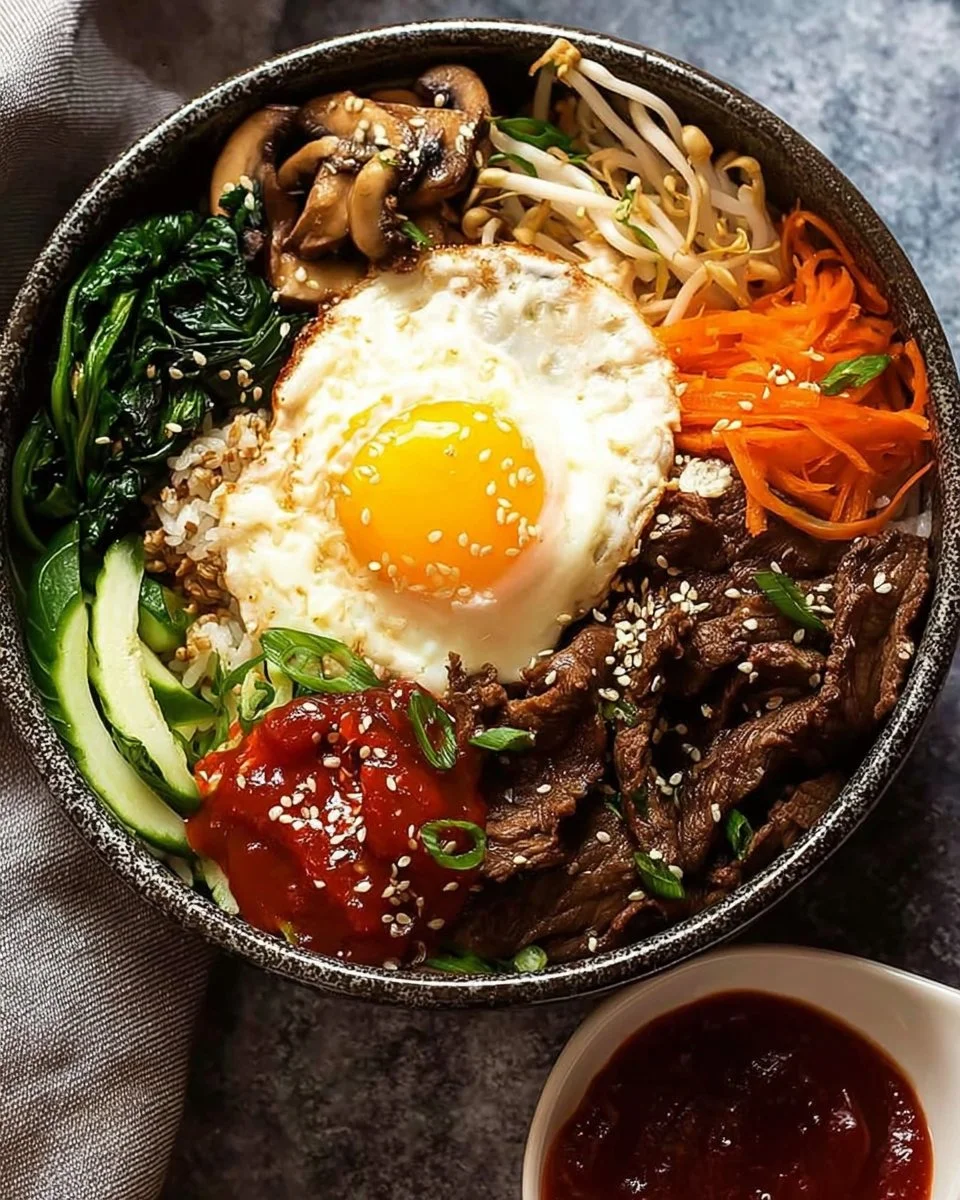
Divide warmed rice among bowls. Top with cooked vegetables, beef slices, and a fried egg on each portion.
Step 8: Final Touch
Finish with a sprinkle of sesame seeds, a drizzle of sesame oil, and a side of prepared Bibimbap sauce to taste.
Pro Tips from My Kitchen
✓ Marinating Mastery – Allow the beef to marinate overnight for the most flavorful outcome. This gives the flavors time to deeply infuse the meat.
✓ Vegetable Vibrancy – Cook vegetables just until tender; overcooking will diminish their color and texture.
✓ Perfect Rice – Use short-grain rice, cooked and cooled to achieve the ideal sticky consistency essential for Bibimbap.
✓ Sauce Savvy – Adjust the spiciness of your Bibimbap sauce by varying the gochujang paste to your liking.
✓ Egg Excellence – Aim to fry the eggs with runny yolks to enrich the Bibimbap once they are mixed into the dish.
Serving Ideas and Variations
- Add some kimchi on the side for a tangy and spicy kick that complements the rich flavors of the Bibimbap.
- Swap out beef for chicken or tofu to easily vary the protein content and try new taste profiles.
- Serve with a light miso soup or a crisp side salad for a refreshing contrast to the warm meal.
- Include a sprinkle of diced chili peppers for those who wish to significantly increase the spice level.
Frequently Asked Questions About Bibimbap
Yes, tofu or chicken are excellent substitutes. Marinating is key to infusing them with flavor. Adjust the cooking time based on the protein.
Cook the vegetables just until they are tender. Overcooking will soften them too much and cause them to lose vibrancy.
Yes, you can prepare all components in advance. Simply store them separately in the refrigerator and assemble together when ready to serve.
Balance the saltiness with a bit of sugar or serve it with plain rice to offset the salt from the other ingredients.
Aside from kimchi and miso soup, Bibimbap pairs well with a simple cucumber salad or a variety of banchan (small Korean side dishes).
Bibimbap Recipe
Ingredients
- 4 cups Cooked White Rice
- 4 pieces Eggs
- 2 teaspoon Sesame Seeds
- 250 g Beef Tenderloin or Thick Steak Sliced finely and marinated.
- ¼ piece Green Apple Grated
- 3 cloves Garlic Minced
- 1 teaspoon Ginger Minced
- 1 tablespoon Soy Sauce
- 1 tablespoon Honey or Brown Sugar
- 2 teaspoon Sesame Oil
- 2 large Carrots
- 2 large Zucchinis
- 1 bunch Spinach
- 8 pieces Dried Shiitake Mushrooms Rehydrated.
- 4 cups Bean Sprouts
- 8 teaspoon Vegetable Oil
- ½ teaspoon Salt
- ¼ teaspoon Fish Sauce
- ¼ teaspoon White Sugar
- 4 tablespoon Gochujang Paste
- 2 tablespoon Mirin
- 2 tablespoon Rice Vinegar
- 1.5 teaspoon Soy Sauce
- 3 teaspoon White Sugar
- 1 clove Garlic
- 2.5 teaspoon Sesame Oil
Instructions
- Mix gochujang paste, mirin, rice vinegar, soy sauce, sugar, garlic, and sesame oil until sugar dissolves to create the Bibimbap sauce.
- Combine grated green apple, garlic, ginger, soy sauce, honey, and sesame oil to marinate the beef. Let it sit for at least 30 minutes, or up to overnight.
- Soak dried shiitake mushrooms in boiling water for 30 minutes to soften them. Slice them for later use.
- Lightly salt the zucchini and carrots, let sit for 20 minutes, then drain.
- Heat 2 teaspoons of oil in a skillet and cook the marinated beef until browned, about 3–4 minutes.
- In separate skillets, cook the shiitakes, carrots, zucchinis, and spinach until just tender but vibrant.
- Simmer bean sprouts in water for 5 minutes or steam them in the microwave for 3 minutes.
- Divide warmed rice among bowls. Top with cooked vegetables, beef slices, and a fried egg on each portion.
- Finish with a sprinkle of sesame seeds, a drizzle of sesame oil, and offer the prepared Bibimbap sauce on the side.
Notes
- For best flavor, marinate the beef overnight.
- Cook the vegetables until just tender to maintain vibrancy.
- Adjust the spiciness of the sauce to your liking.




Leave a Reply